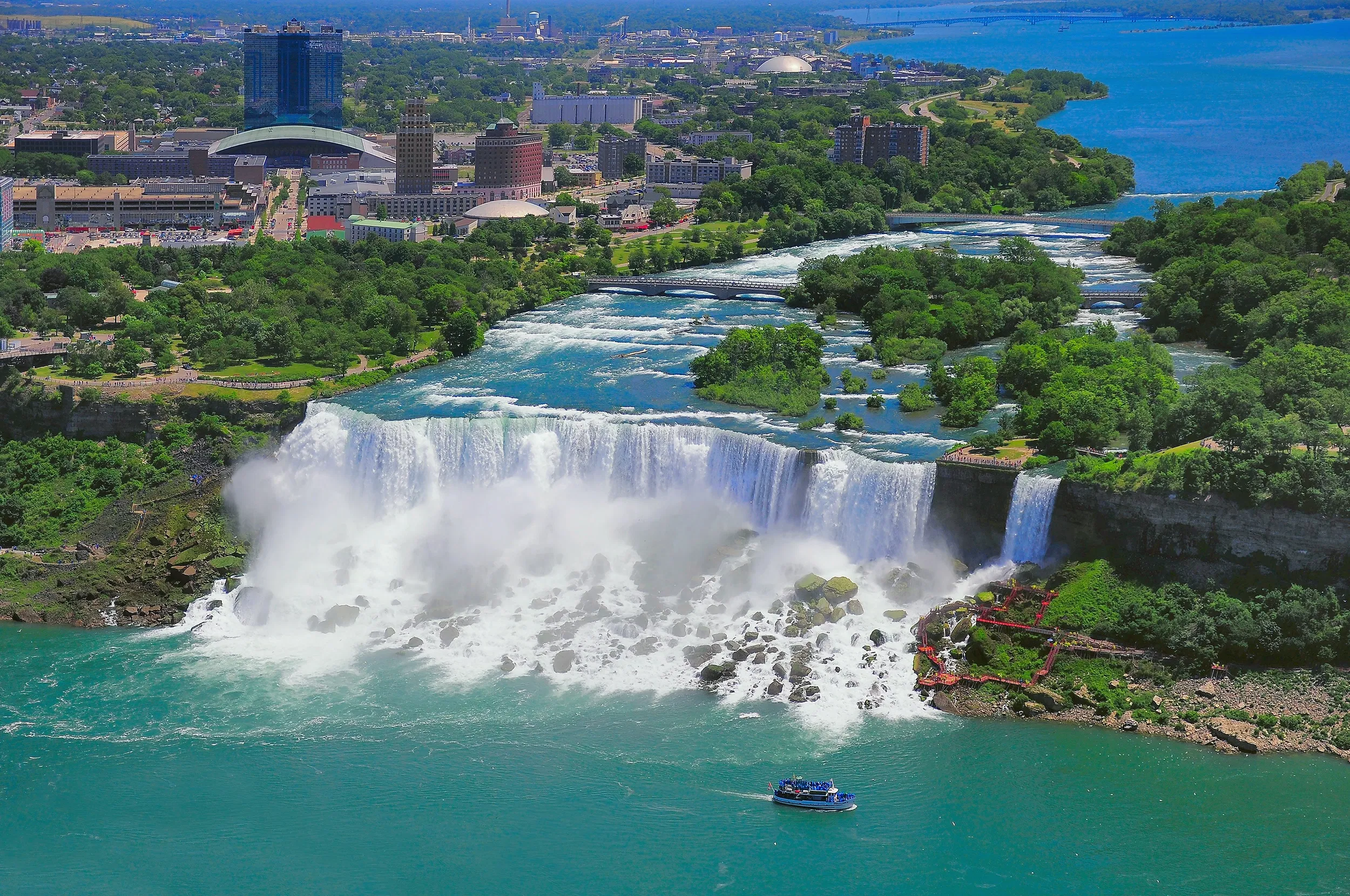
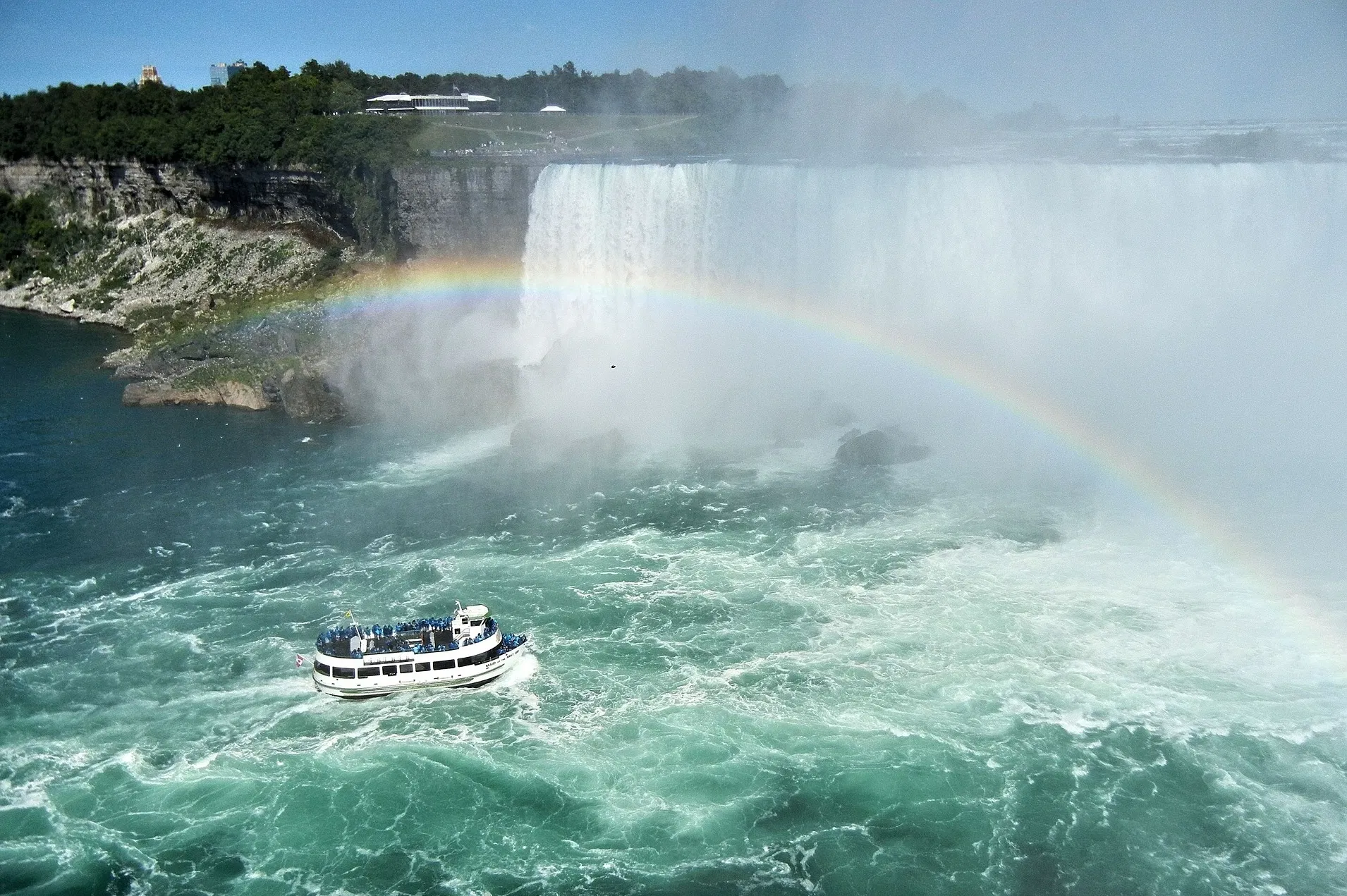
Most people picture Niagara Falls in daylight — green water, white spray, rainbows hanging in the mist. But the falls have a second life after sunset. Every single night of the year, powerful colored floodlights wash across both the American and Horseshoe Falls, turning the cascades into a slow, shifting canvas of red, blue, green, gold, and pink. It is one of the few genuinely free, world-class spectacles you can see in the United States, and for many first-time visitors it's the most memorable part of the trip. This guide covers exactly what the illumination is, when it runs by season, where to stand for the best view, and how to photograph it without a pro camera.
What the Illumination Actually Is
The nightly lighting of Niagara Falls is a coordinated show run by the Niagara Falls Illumination Board, an organization funded jointly by communities on both the U.S. and Canadian sides. The lights are mounted across the river on the Canadian shore and aimed at both falls, so the colors you see from the New York side are projected from across the gorge. Since a major 2016 upgrade, the system uses high-output LED lights that are brighter, more vivid, and capable of far more color combinations than the old xenon bulbs. On any given night the falls may glow a single solid color, fade through a rainbow sequence, or display themed colors tied to a holiday, cause, or special event. The result is constantly changing, which is part of the magic — no two visits look exactly the same.
When Does the Illumination Start and End?
The single most useful thing to know is that the lights come on at dusk every night, all year round — there is no off-season for the illumination itself. Because sunset shifts so much through the year, the start time moves with it. In the depths of winter the show can begin as early as the late afternoon, around 5 p.m., while in midsummer it may not really take hold until after 9 p.m. once the long northern twilight finally fades. The illumination then runs late into the evening, typically continuing past midnight, with the lights staying on later in the busy summer months and during special events. For planning purposes, the simplest rule is to be at the falls about 30 minutes after sunset for that perfect blue-hour moment when there's still a hint of color in the sky and the lights are already glowing. If you want to time your visit to the season as a whole, our best time to visit Niagara Falls guide breaks down weather, crowds, and what's running month by month.
The Best Spots to See It (U.S. Side)
From the New York side, you're looking at the lights as they're projected across the gorge, which gives you a clean, dramatic head-on view of the colored water. Prospect Point inside Niagara Falls State Park is the classic vantage — it sits right at the brink of the American Falls and frames both cataracts at once. Walk a little farther out onto Goat Island and Terrapin Point, and you'll get a sweeping angle toward the curve of Horseshoe Falls. The Rainbow Bridge and the area around the observation tower also offer excellent, slightly elevated perspectives. The whole park stays open in the evening specifically so visitors can enjoy the show, and the riverside paths feel completely different at night — quieter, cooler, and lit only by the glow off the water. For a full rundown of vantage points, including daytime ones, see our Niagara Falls photography spots guide.
The Easiest Way to See It: A Guided Night Tour
Seeing the illumination on your own is absolutely doable, but it does come with the usual evening logistics: parking, finding your way around an unfamiliar park in the dark, and figuring out the best viewpoints by trial and error. A guided Niagara Falls night illumination tour removes all of that. You're taken straight to the prime viewing spots with a guide who knows the timing and the angles, so you spend your evening watching the falls instead of managing the trip. Tours that pair the lights with the falls up close make for an unforgettable night, and because evenings draw far thinner crowds than midday, you get the headline scenery with room to breathe. It's an especially good option for first-timers, couples, and anyone who'd rather not drive after dark.
Winter, Holidays, and the Festival of Lights
If you visit between roughly mid-November and early January, the nightly illumination is joined by the Niagara Falls Festival of Lights — a months-long winter event that strings millions of additional lights and animated displays through the parks, gardens, and surrounding streets. It transforms the whole area into a walkable wonderland, with the colored falls as the centerpiece. The cold keeps casual visitors away, so the atmosphere is hushed and almost private compared to summer. A holiday-edition illumination tour is the most comfortable way to experience it, getting you to the best of both the falls and the festival without standing around in the cold sorting out logistics. To go deeper on the event itself, read our Festival of Lights guide, and for cold-weather essentials, our Niagara Falls in winter guide covers exactly what to expect.
Photo Tips for the Illuminated Falls
You don't need professional gear to capture the illumination, but a few habits make a huge difference. First, steady your camera — rest your phone or camera on a railing, ledge, or a small travel tripod, because night shots need a longer exposure and even tiny hand shake will blur the water. Second, shoot during blue hour, the 20-to-40-minute window just after sunset; that residual sky color separates the falls from a pitch-black background far better than full darkness. Third, turn off your flash entirely — it does nothing across a quarter-mile of gorge and only lights up the mist in front of you. If your phone has a Night mode, use it and hold still through the full capture. Finally, the spray is real even at night, so keep a lens cloth handy and tuck your gear away between shots. For the broader packing checklist, see our what to pack for Niagara Falls guide.
Plan Your Night at the Falls
The illumination rewards a little planning: check the day's sunset time, aim to arrive about half an hour after it, dress warmer than you think you'll need (the gorge is breezy and the mist is cool even in summer), and pick your viewpoint before the light fades. Whether you go solo or book a guided evening tour, the colored falls at night are one of Niagara's great free gifts — grand, ever-changing, and far less crowded than the daytime rush. Traveling with a group, a class, or a family reunion? Our group tour options make it easy to keep everyone together for the show. Time it right, find your spot, and let the falls glow.
Frequently asked questions
Is Niagara Falls lit up every night?+
What time does the Niagara Falls illumination start?+
How much does it cost to see the illumination?+
Where is the best place to see the lights on the U.S. side?+
What is the Niagara Falls Festival of Lights?+
How do I photograph the falls at night with a phone?+
Book These Tours
See Niagara Falls your way
Day trips from NYC, night illumination tours, the Maid of the Mist boat ride, jetboat rapids, and airport transfers — all bookable in one place with instant confirmation.
Browse all Niagara Falls tours →